Cycling · Mountain

Mountain e-bikes

Assistance where the climbs are long and loose, with the frame, brakes and tyres to cope with the way back down.

6 models · from £899.99 · longest claimed range 60 miles · lightest 22.2 kg

What a mountain e-bike is

An e-mountain bike is not a mountain bike with a motor bolted on. The extra weight sits low in the frame, which helps stability, but it also means the brakes and tyres have more to do. Torque matters more than headline power here: a motor that pulls strongly at walking pace is what gets you up a loose climb, while top-end assistance counts for little when the fastest you travel is on the fire road.

A hardtail is lighter, simpler and cheaper, and suits forestry tracks, bridleways and trail-centre blues. A full-suspension e-bike weighs more and costs more, but keeps the rear wheel planted on rough ground and is much kinder on your back over a long descent. Both are legal on bridleways and cycle trails; neither is legal on a public footpath, however capable it is.
Who a mountain e-bike suits

  • Trail centres, forestry tracks and bridleways where the climb is the barrier rather than the descent.
  • Steep local hills that turn a pedal bike into a walk.
  • Riders carrying a rucksack, a camera or a day’s kit, where the extra weight is the reason for the motor.
  • Anyone whose knees have opinions about a 20 per cent gradient.
The range

Every mountain e-bike we sell

UK legal
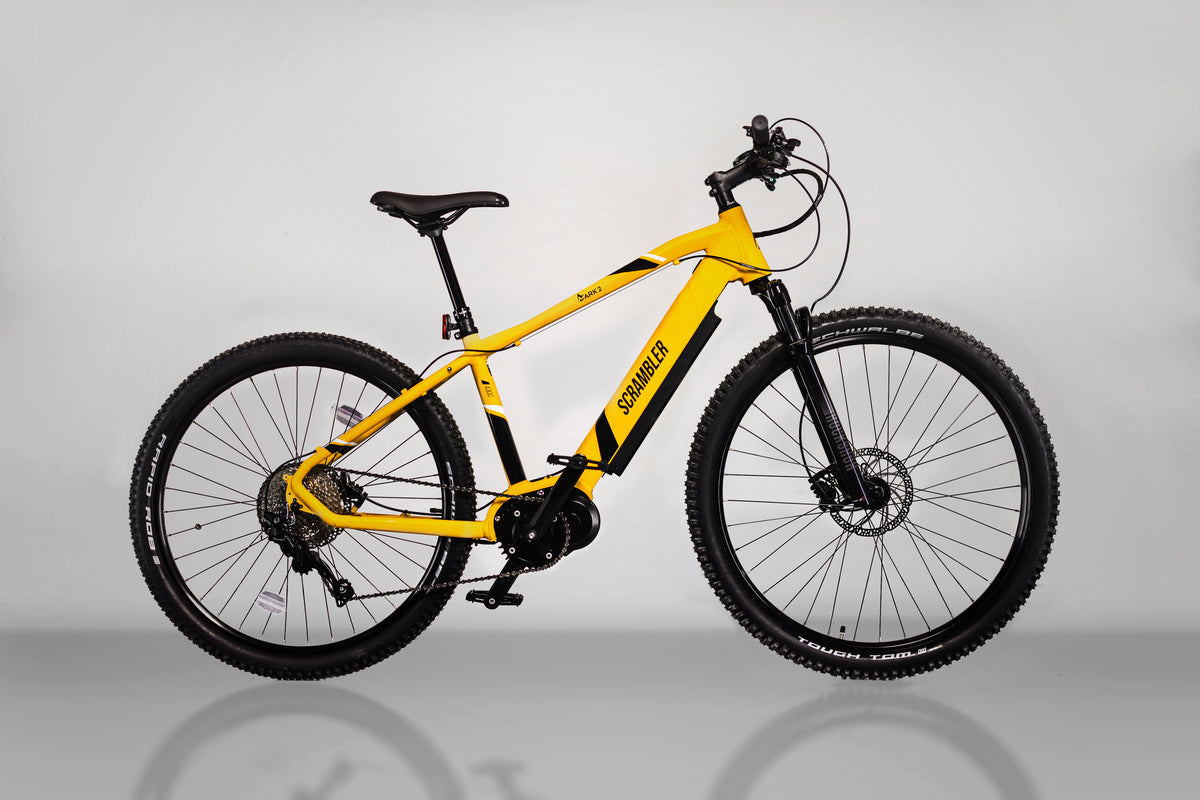
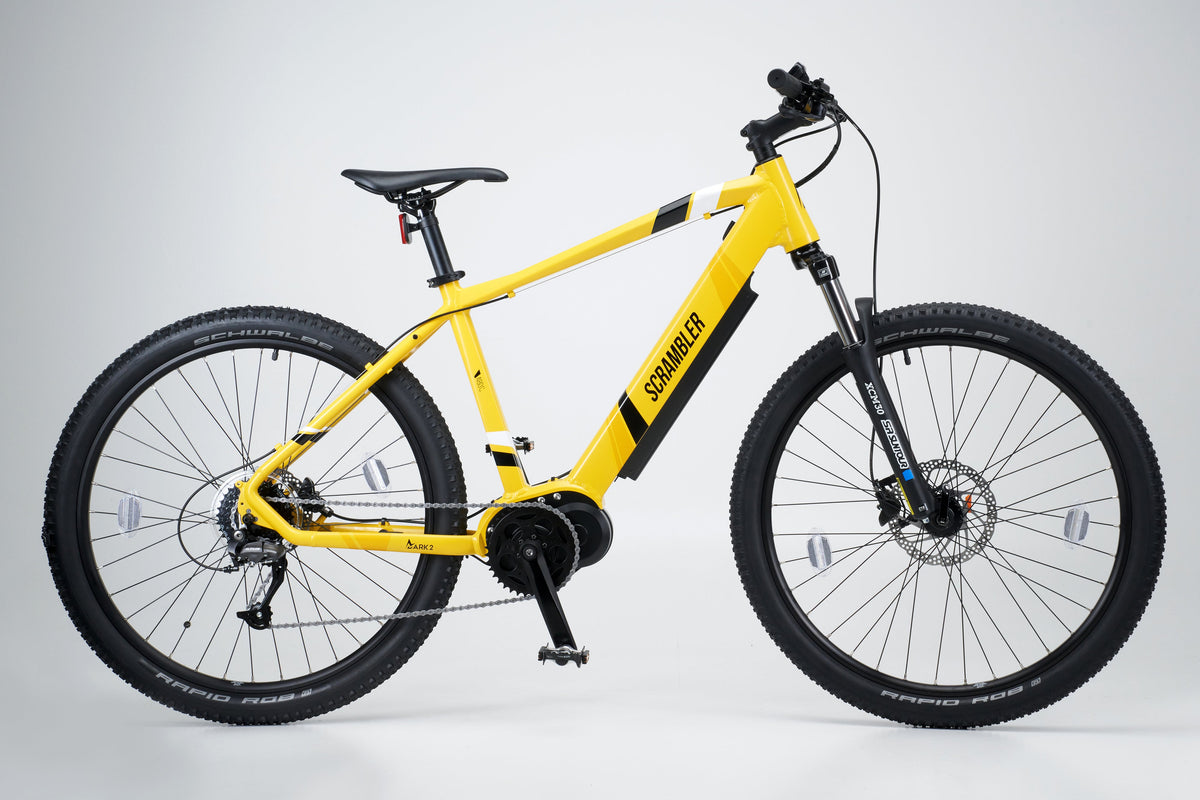
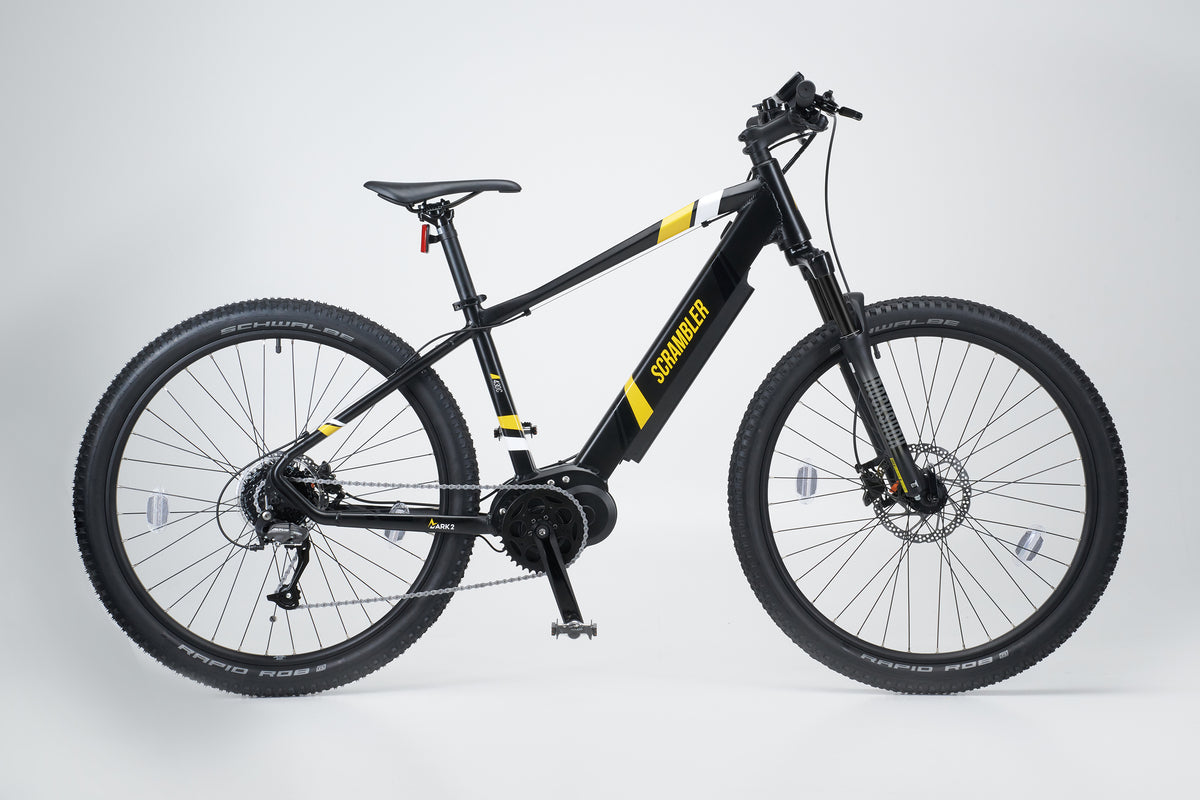
Photograph of the Mark2 Scrambler Hardtail
Mark2

Scrambler Hardtail

Mountain · Hardtail · 60 mi range

  • 54 Nm
  • 375 Wh
  • 22.4 kg
UK legal
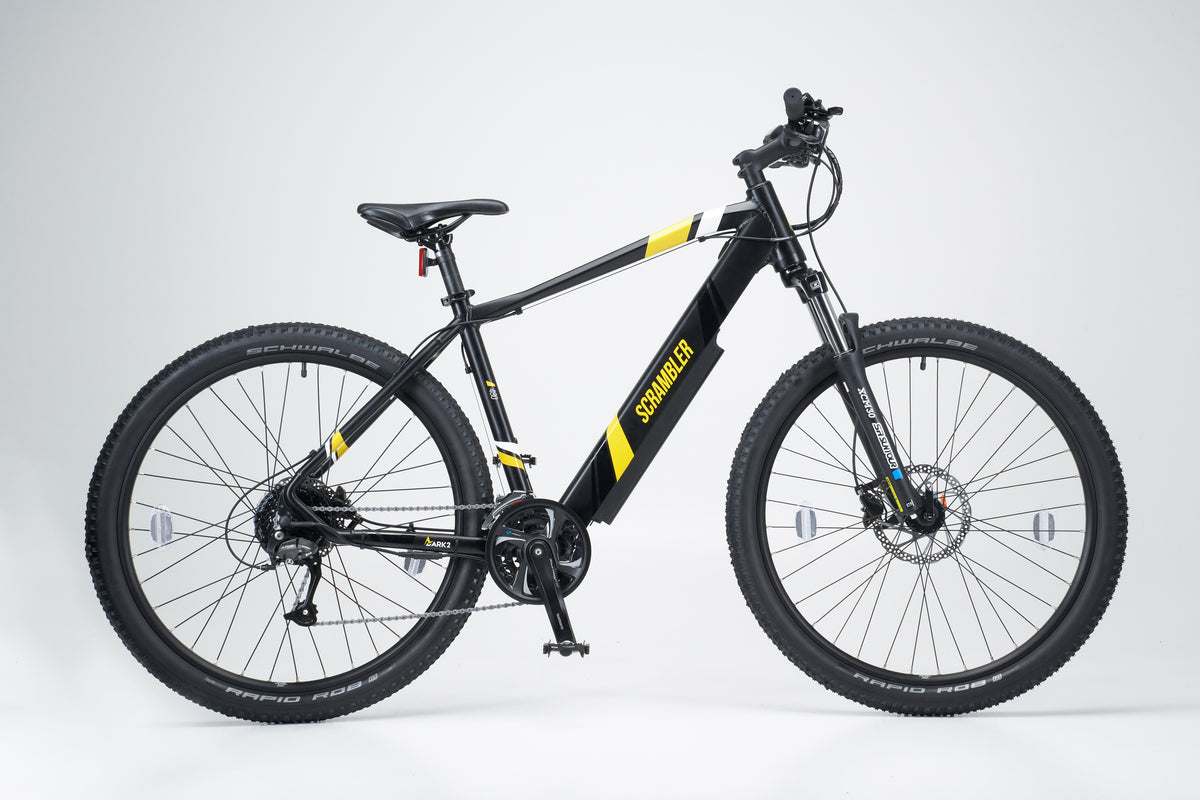
Photograph of the Mark2 Scrambler C Hardtail
Mark2

Scrambler C Hardtail

Mountain · Hardtail · 60 mi range

  • 90 Nm
  • 375 Wh
  • 22.9 kg
UK legal
Photograph of the Mark2 Scrambler CL Hardtail
Mark2

Scrambler CL Hardtail

Mountain · Hardtail · 60 mi range

  • 90 Nm
  • 460 Wh
  • 22.2 kg
UK legal
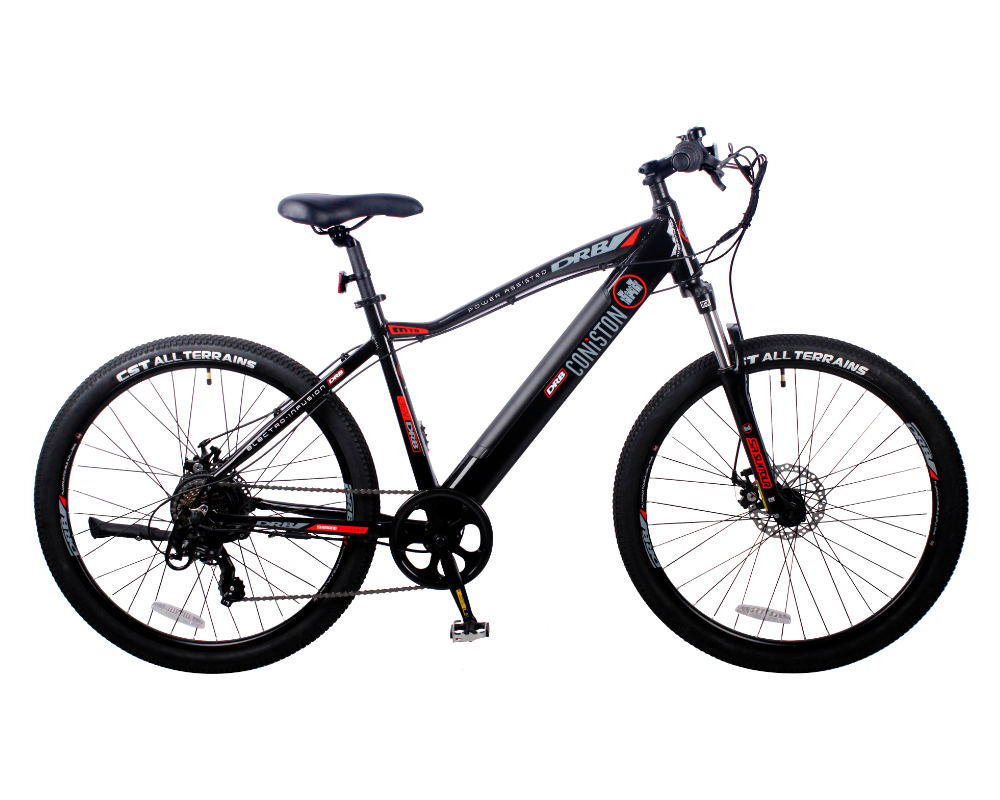
Photograph of the Dallingridge Coniston Hardtail
Dallingridge

Coniston Hardtail

Mountain · Hardtail · 50 mi range

  • Not stated
  • 504 Wh
  • Not stated
UK legal
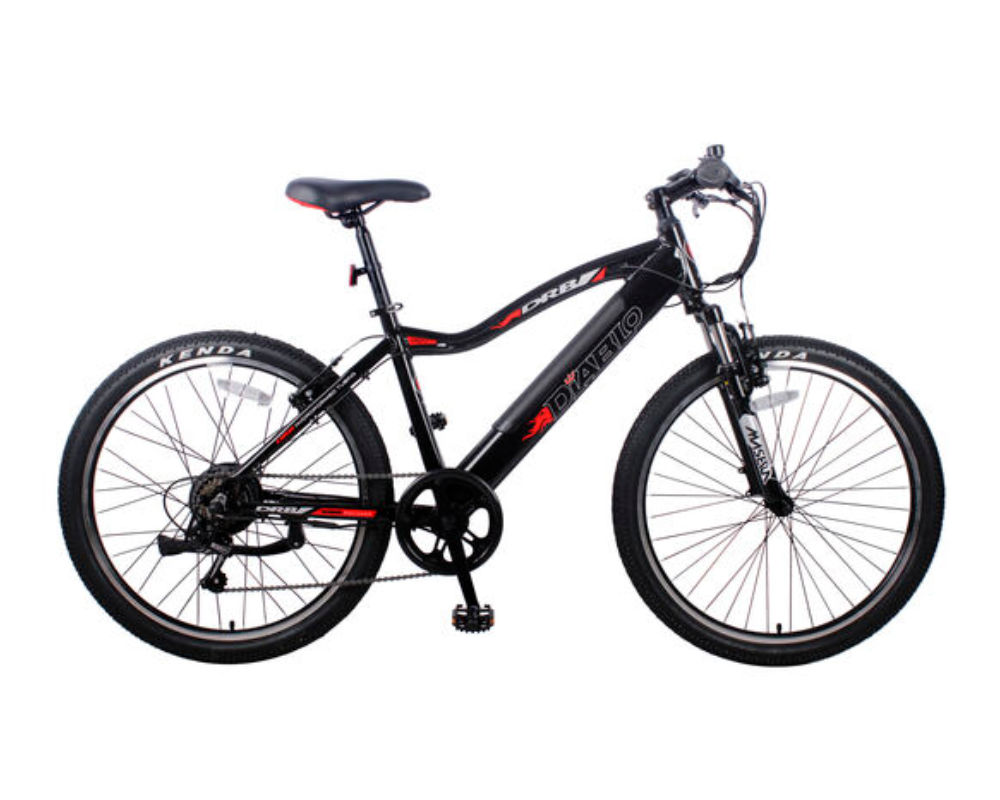
Photograph of the Dallingridge Diablo Hardtail
Dallingridge

Diablo Hardtail

Mountain · Hardtail · 25 mi range

  • Not stated
  • 281 Wh
  • Not stated

Compare every e-bike in the shop

What to check before you buy

  • Torque at the crank, in newton metres, rather than peak watts. Torque is what lifts you and the bike up a loose slope.
  • Brakes: hydraulic discs, with four-piston calipers on anything heavy or fast. A loaded e-mountain bike is a lot of momentum to stop on a wet root.
  • Battery capacity against weight. A bigger pack buys range and costs kilos, and every kilo is a kilo you push when the assist runs out.
  • Tyre width and tread, and the clearance to fit something more aggressive later.
  • Frame size and standover height. A heavy bike is harder to step off in a hurry, so the size that fits matters more than usual.
  • Motor position: a mid-drive keeps the weight central and uses the bike’s gears, which is what you want on a climb. A hub motor is cheaper and simpler, and better suited to gentle tracks than to technical descents.

Other types of e-bike

Each type has its own page, with what it is for and what to check before you buy one.

Not sure which type suits your riding? The buying guide compares them, and the whole shop can be filtered by price, range and brand.